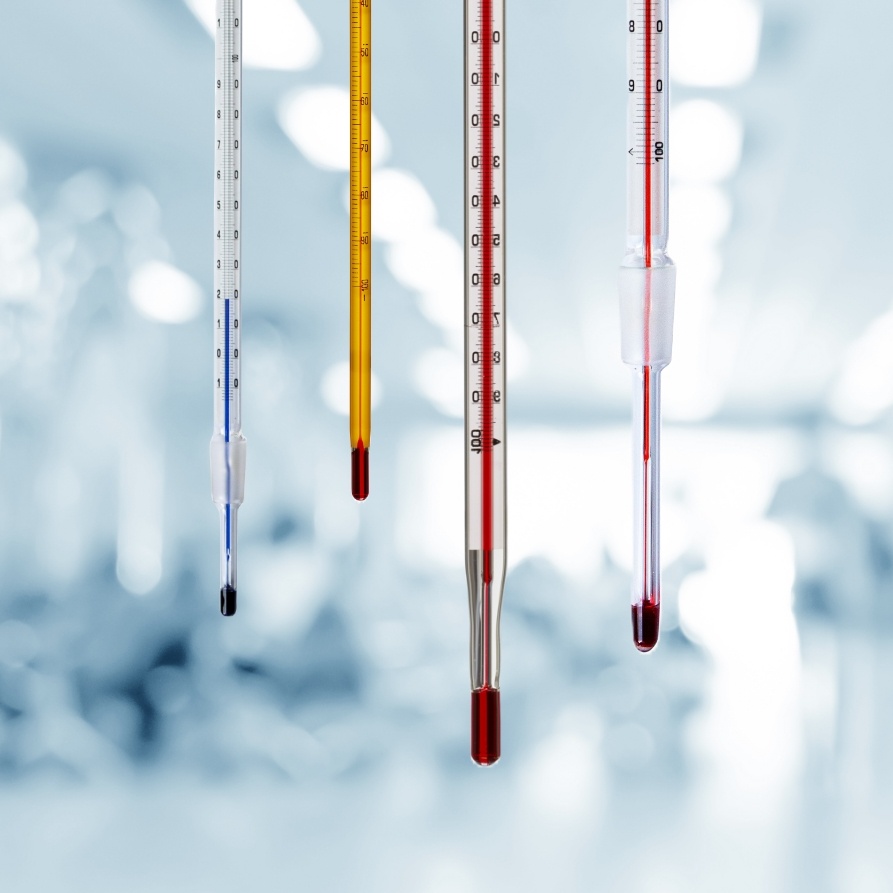
in 1910), is one of the most established and reputable manufacturers of temperature and density measurement instruments. Owing to their German engineering quality, long-term stability, and traceable calibration capability, Ludwig Schneider products are widely used in laboratories and specialized industrial applications.
The company primarily focuses on the production of high-precision laboratory, industrial, and research-grade measuring instruments, with particular emphasis on accuracy, repeatability, and compliance with international standards.
Types of Thermometers Manufactured by Ludwig Schneider
(Scientific and Technical Description)
1. Precision Glass Laboratory Thermometers
This category represents one of the company’s most well-known product lines.
Technical Features
Manufactured from high-quality German borosilicate glass with excellent thermal and chemical resistance
Filled with non-mercury liquids such as ACCU-SAFE or other standardized alternative fluids
Measurement accuracy depending on model:
0.1°C
0.05°C
0.01°C (Reference models)
High-contrast, easy-to-read scale graduation
Selected models equipped with FEP/PTFE protective coating to prevent liquid dispersion in case of breakage
Optional supply with calibration certificates
Applications
Chemical and research laboratories
Quality control laboratories
Pharmaceutical industry
Food industry
Universities and educational institutions
Precise temperature measurement in solutions and reactions
2. Digital Thermometers with Probe
Designed for environments requiring rapid measurement, immersion in liquids, or continuous temperature monitoring.
Features
Stainless steel probe
Standard sensors: NTC, Pt100, Pt1000
Accuracy typically up to 0.1°C, depending on model
High-visibility digital display
Some models equipped with high/low alarm functions
Dual-channel models for simultaneous measurement at two points
Portable versions available for industrial use
Applications
Food processing industry
Cold storage and temperature-controlled warehouses
Industrial processes
Pharmaceutical and biotechnology sectors
3. Glass Reference Thermometers
Standard instruments used for calibration and high-precision measurements.
Features
Length of 300–400 mm to enhance measurement accuracy
0.01°C resolution in reference models
Exceptional long-term stability
Suitable for DAkkS calibration certification
Excellent repeatability for use as reference standards
Applications
Calibration laboratories
Temperature standardization
Research and development (R&D)
4. Resistance Thermometers (RTD – Pt100 / Pt1000)
Designed for harsh industrial environments.
Features
Highly stable Pt100 or Pt1000 sensors
Resistant to mechanical shock, humidity, and chemical exposure
Compatible with control systems such as PLC
Suitable for wide temperature ranges
Applications
Oil and petrochemical industries
Machinery manufacturing
Power plants
Metal and steel industries
5. Special Thermometers
Developed for specific and demanding operating conditions, including:
Cryogenic temperatures
Very high temperatures
Corrosive environments
Applications with glass breakage risk
Sensitive industrial processes
Build Quality and Key Strengths of Ludwig Schneider Thermometers
1. High-Quality Materials
Use of chemically stable borosilicate glass
High resistance to thermal expansion
Long service life under proper usage
2. Safe, Non-Mercury Liquids
Environmentally compliant
Free from mercury-related hazards
Stable temperature performance
3. Manufacturing Accuracy and Calibration
Produced in accordance with DIN, ISO, or ASTM standards (model-dependent)
Availability of DAkkS calibration certificates
Multi-stage quality control processes
4. Long-Term Stability
Measurement accuracy maintained over extended periods
Ideal for sensitive and traceable applications
Advantages Compared to Conventional Thermometers
Feature
Conventional Thermometers
Ludwig Schneider Thermometers
Accuracy
≥ 0.5°C
0.1°C to 0.01°C
Long-term stability
Accuracy degrades over time
Multi-year stability
Glass quality
Standard glass
German borosilicate glass
Filling liquid
Alcohol / Mercury
High-precision non-mercury fluids
Standards compliance
Often none
DIN / ISO / ASTM
Calibration capability
Not available
Available
Application range
General use
Laboratory / Industrial
Who Should Use Ludwig Schneider Thermometers?
Research laboratories
Pharmaceutical industries
Food processing industries
Refineries and petrochemical plants
Calibration centers
Universities
Industrial quality control departments
Key Criteria for Selecting the Appropriate Model
Criterion
Description
Temperature range
Select a model suitable for the required range (e.g., sub-zero or above 200°C)
Required accuracy
High-precision tasks may require resolutions down to 0.01°C
Application type
Laboratory → precision glass / Industrial → digital or RTD
Calibration requirement
Essential for official measurements and quality assurance
Environmental safety
Protective or digital models recommended for corrosive or high-risk environments
Measurement speed
Digital models are preferable for rapid processes
Recommended Models for Typical Applications
High-precision laboratory work: Precision Laboratory Thermometer or Reference Thermometer
Industrial environments: Digital Thermometer or RTD (Pt100)
Continuous monitoring: Digital Thermometer with Alarm
Conclusion
Ludwig Schneider thermometers are positioned among professional-grade measurement instruments due to their high accuracy, long-term stability, German manufacturing quality, and traceable calibration options. These products represent a reliable choice for any environment where precise and dependable temperature measurement is essential.